
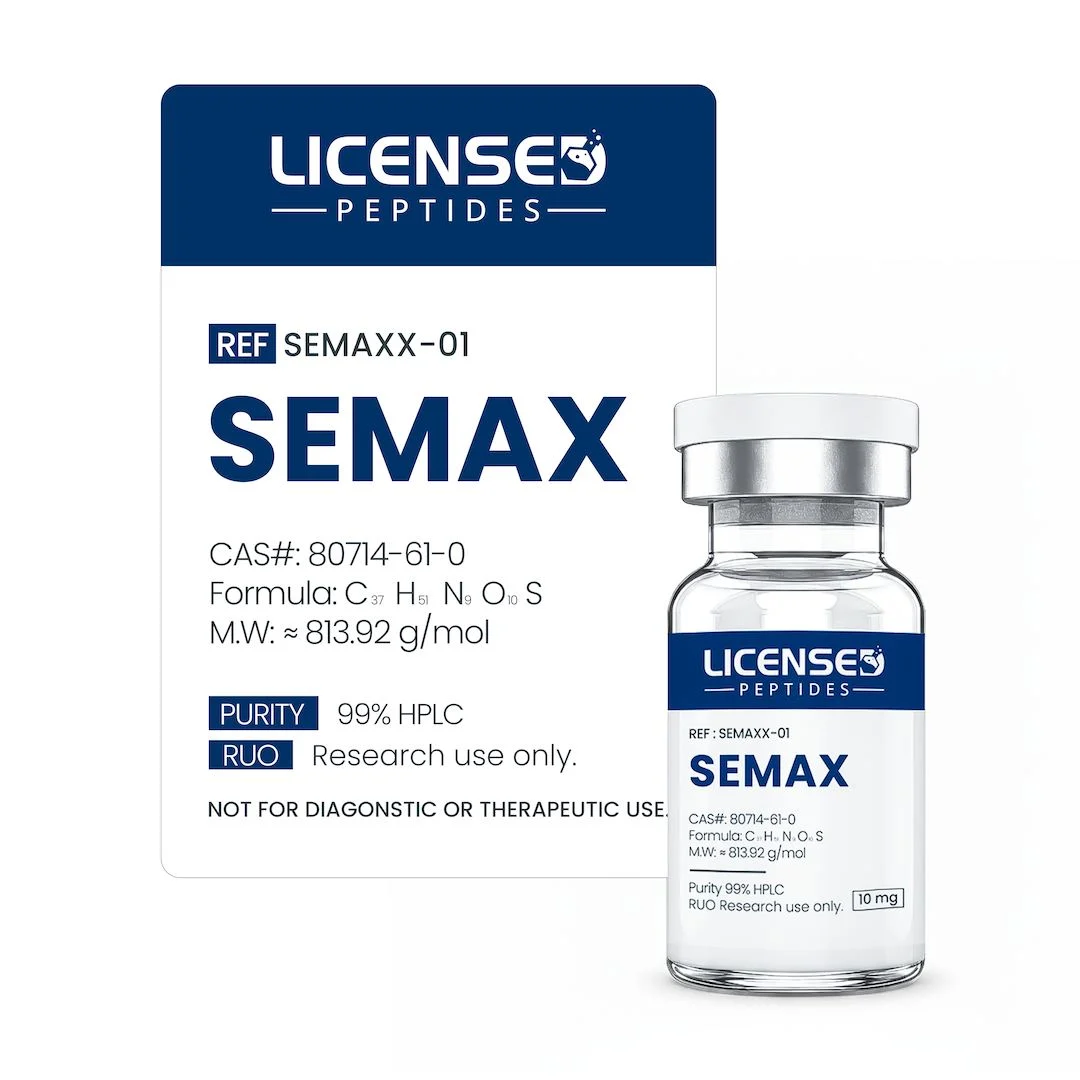
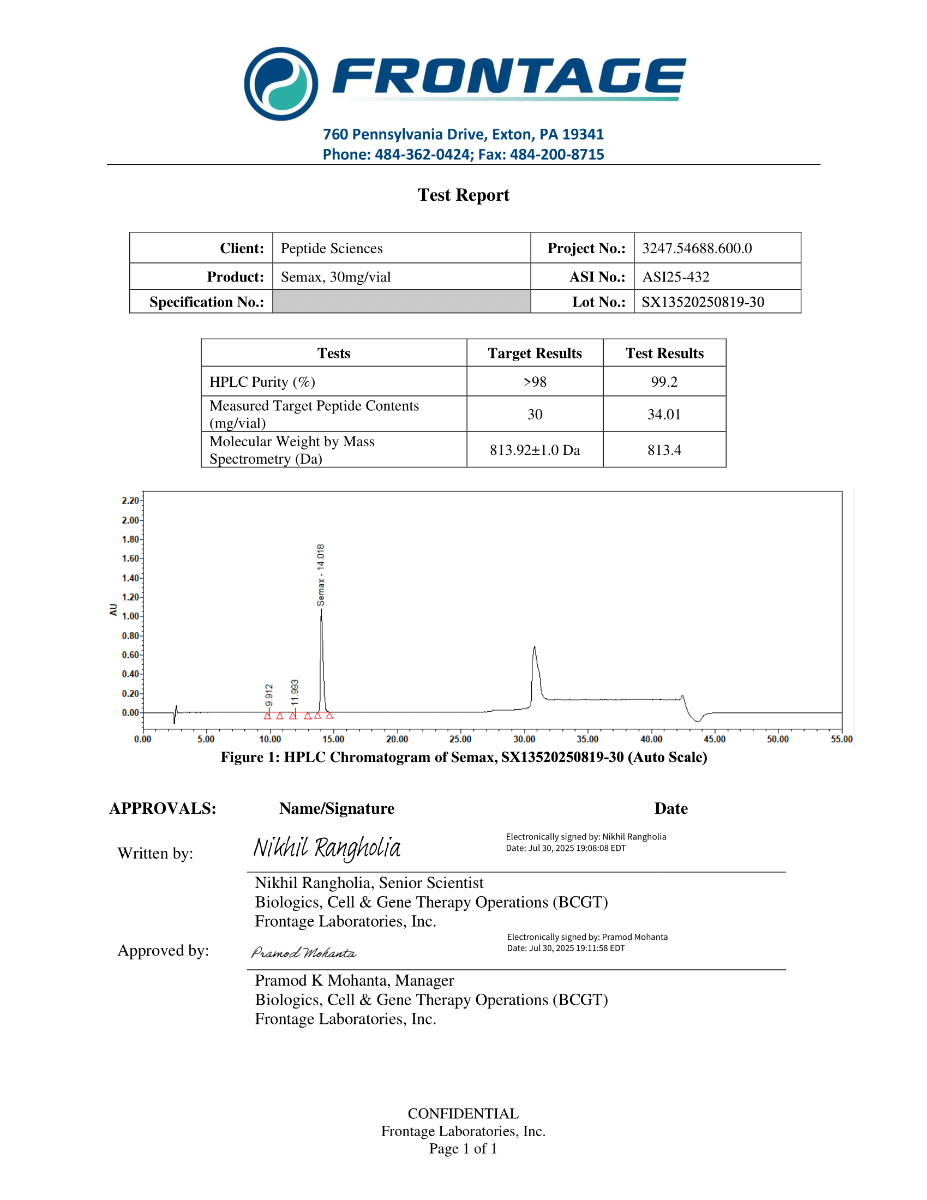
Semax is a synthetically engineered heptapeptide (Met-Glu-His-Phe-Pro-Gly-Pro) structurally derived from the ACTH(4–10) fragment. In research settings, it is employed as a model compound for investigating neurotrophic and nootropic signaling pathways, particularly through its interaction with brain-derived neurotrophic factor (BDNF), tropomyosin receptor kinase B (TrkB), and neurogenic transcriptional regulators including nerve growth factor (NGF) and growth-associated protein 43 (GAP-43).
Within preclinical and in vitro systems, Semax has been studied for its influence on cellular redox homeostasis, synaptic plasticity, and dopaminergic signaling within central nervous system models. These effects are typically evaluated through quantifiable biomarkers and gene expression analyses, supporting its role as a research tool for examining mechanisms underlying neuronal adaptation, oxidative stress responses, and neurotransmitter regulation, without inference of clinical efficacy in humans
For research use only. Not for human consumption.
References:
Ashmarin IP et al., Neurosci Behav Physiol, 1998 28(3):341-348
Ashmarin IP et al., Neurochem J, 2005;39(1):36–44
Dolotov OV et al., Brain Res Bull, 2011 85(5):327-332



Reviews
There are no reviews yet.